
Catalogue: Manage your sheet music professionally
Your central management tool for works, notations and editions
The Soundnotation Catalogue organizes your music on three clear levels: Works, Notations and Editions. The “Contributors” table additionally links all composers, lyricists, artists and other participants — for maximum overview and efficient management.
Created right after upload
Works
The Works table stores the basic information about your copyright-protected works — the foundation for all notations and editions that are derived from them.
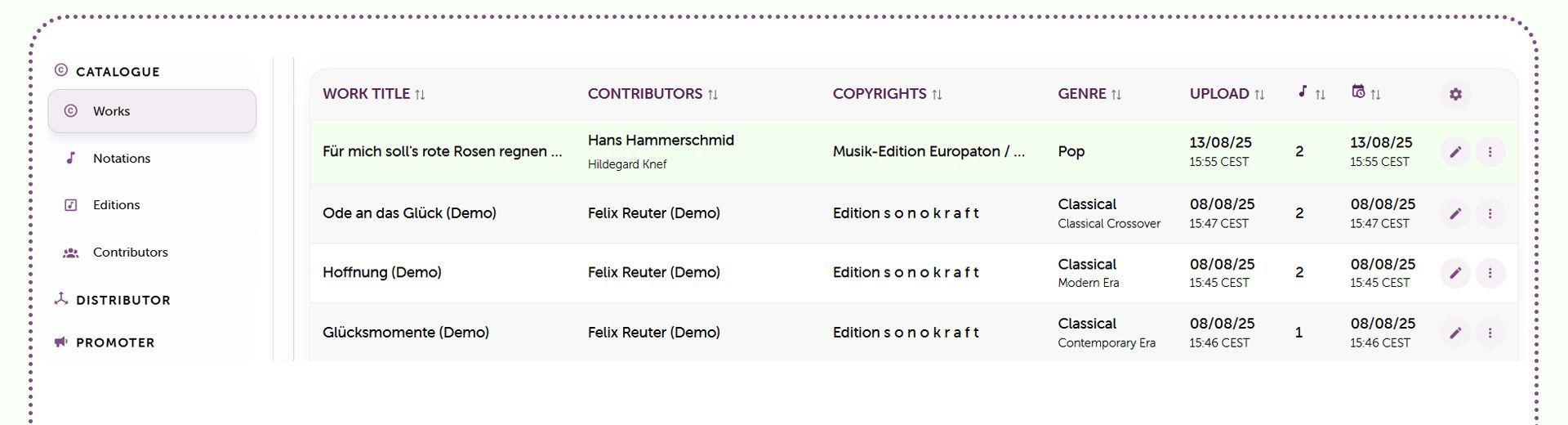
Created right after upload
Notations
The Notations table contains the actual sheet music scores. Any number of notations can be created per work — for example for different instruments, ensembles or genres.
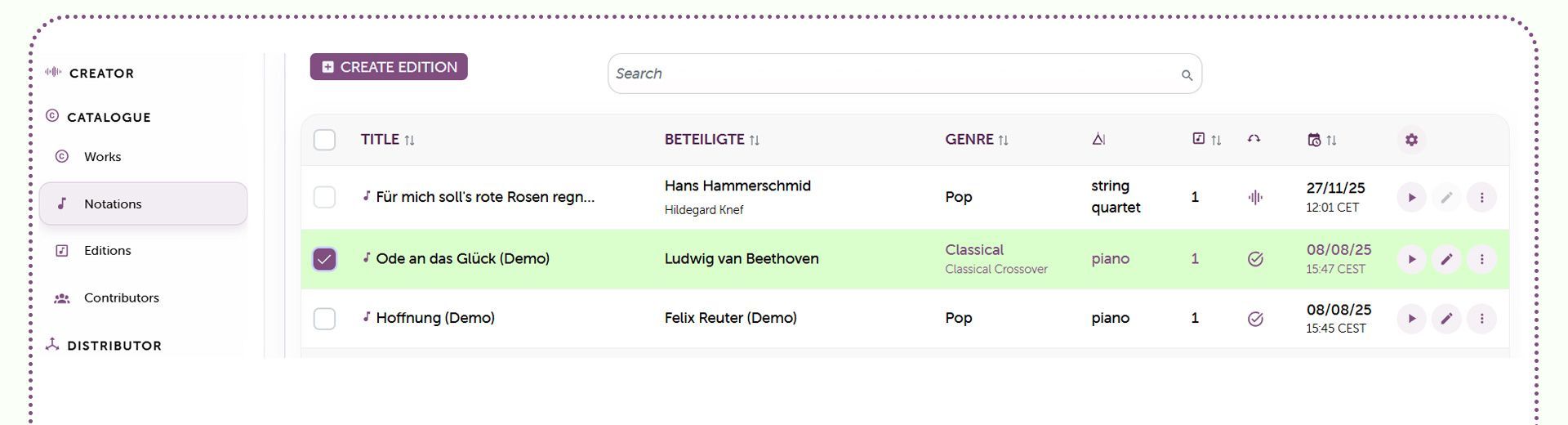
Create from notations
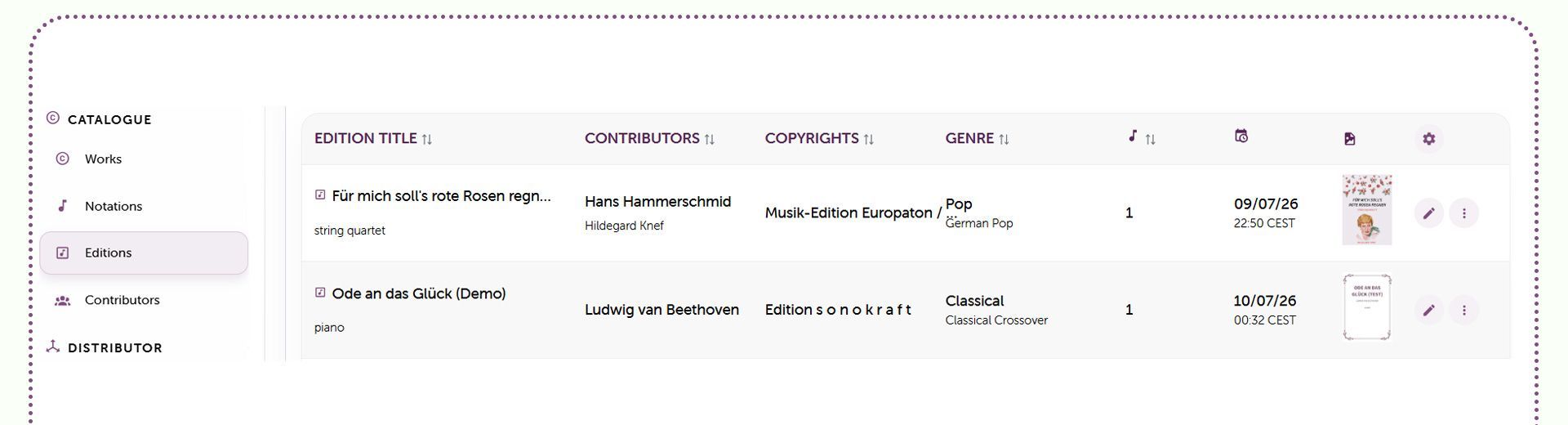
Editions
The Editions table contains ready-to-publish sheet music editions. You can create editions at any time — even without publishing or distributing them.
More about Editions bellow.
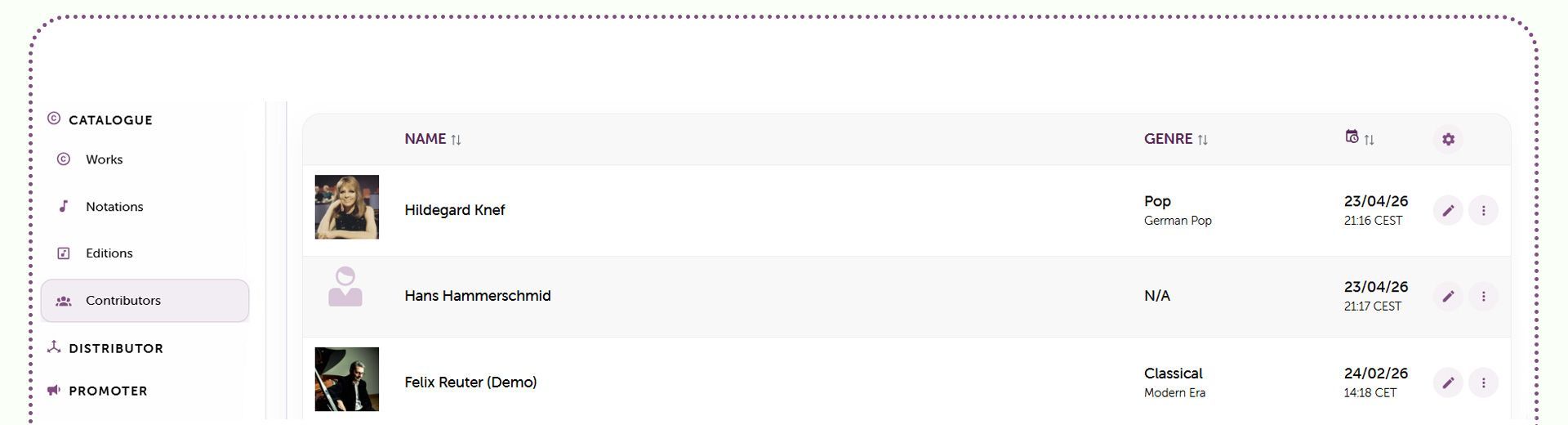
Info & links for all contributors
Contributors
In the Contributors table you store information and links for composers, lyricists, artists and other participants. This data can later be used flexibly — for example for artist pages in editions or for a free link-marketing page of a contributor (Promocard) in the Promoter.
Why this structure?
More flexibility. Less effort.
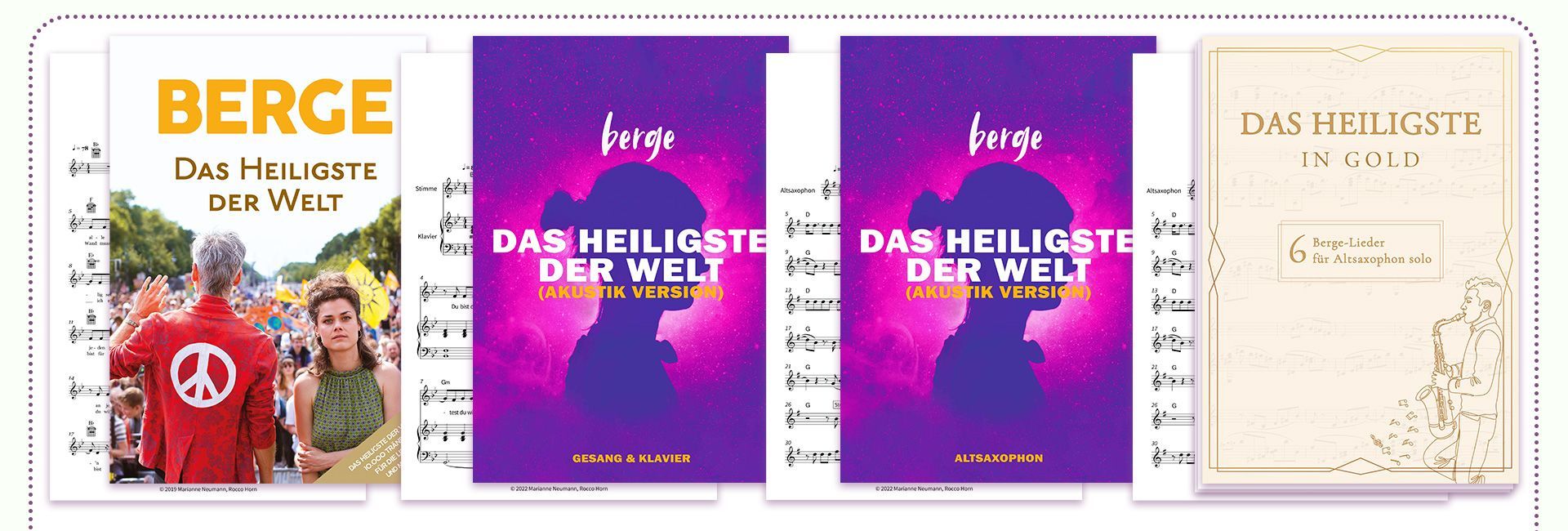
So that you can create any number of versions from one work — without having to set everything up again. A song becomes a lead sheet, a voice-&-piano edition, an alto saxophone edition, or even an entire album.
What’s in an edition?
Ready-to-publish sheet music edition — automatically complete
An edition combines one or more notations into a ready-to-publish publication. The table of contents and imprint page are generated automatically from the data you have stored.
For digital distribution you only need metadata and a cover; you can also add an audio sample.
For ensembles the edition includes the full score as well as all individual parts. Original or simplified version as well as genre-adapted versions (e.g. jazz) can easily be created this way.

MADE IN EUROPE WITH ♥
TO SUPPORT MUSIC CREATORS
THE BEST MUSIC SERVICES
BY SONOVATIVE MUSIC GROUP
Services
Languages


© 2026 Sonovative GmbH | Legal notice | Privacy policy | Terms of service | Shipping & Delivery | Returns & Refunds | Contact
© 2023 Sonovative GmbH | Rechtliches | Impressum | Kontakt